Explain what a company does
PR#720 (private repository) LiveBefore · described
The company header needed a plain description of the business.
The change
A short sentence using existing industry and sector data under the company header.

AlgoThesis · First-party trial · 5 October 2026
We tried Patchkind on AlgoThesis, a product run by Patchkind’s own owner. The aim was modest: turn small points of confusion into reviewable code changes using Claude Code inside the owner’s GitHub repository.
A supervised trial on our own app—not an independent customer testimonial or a general success-rate claim.
The workflow
The workflow required an approved plan and an explicit Run action. Claude worked from the plan, used the project’s allowed checks, and returned a pull request or a question. A person still reviewed the result and decided what to merge.
We have not attributed each Run click to a particular person: GitHub’s bot identity does not establish who pressed it.
Below, requests and plans are summarized from the documented PR scope. They are not verbatim user reports.
The AlgoThesis repository is private; screenshots of the live changes are shown here. These are product screenshots, not PR captures.
What changed
Claude’s 5 October read-only verification confirmed all four changes live on algothesis.ai. Each PR has one bot commit and was merged by the owner.
#720 (private repository) LiveBefore · described
The company header needed a plain description of the business.
The change
A short sentence using existing industry and sector data under the company header.
#723 (private repository) LiveBefore · described
The first merged change still needed a layout and naming follow-up.
The change
Move the sentence onto its own line and adjust the display of company names.

#724 (private repository) LiveBefore · described
An unexplained dash left missing price data unclear.
The change
Replace the dash with “no price data” and explain when a move can be shown.
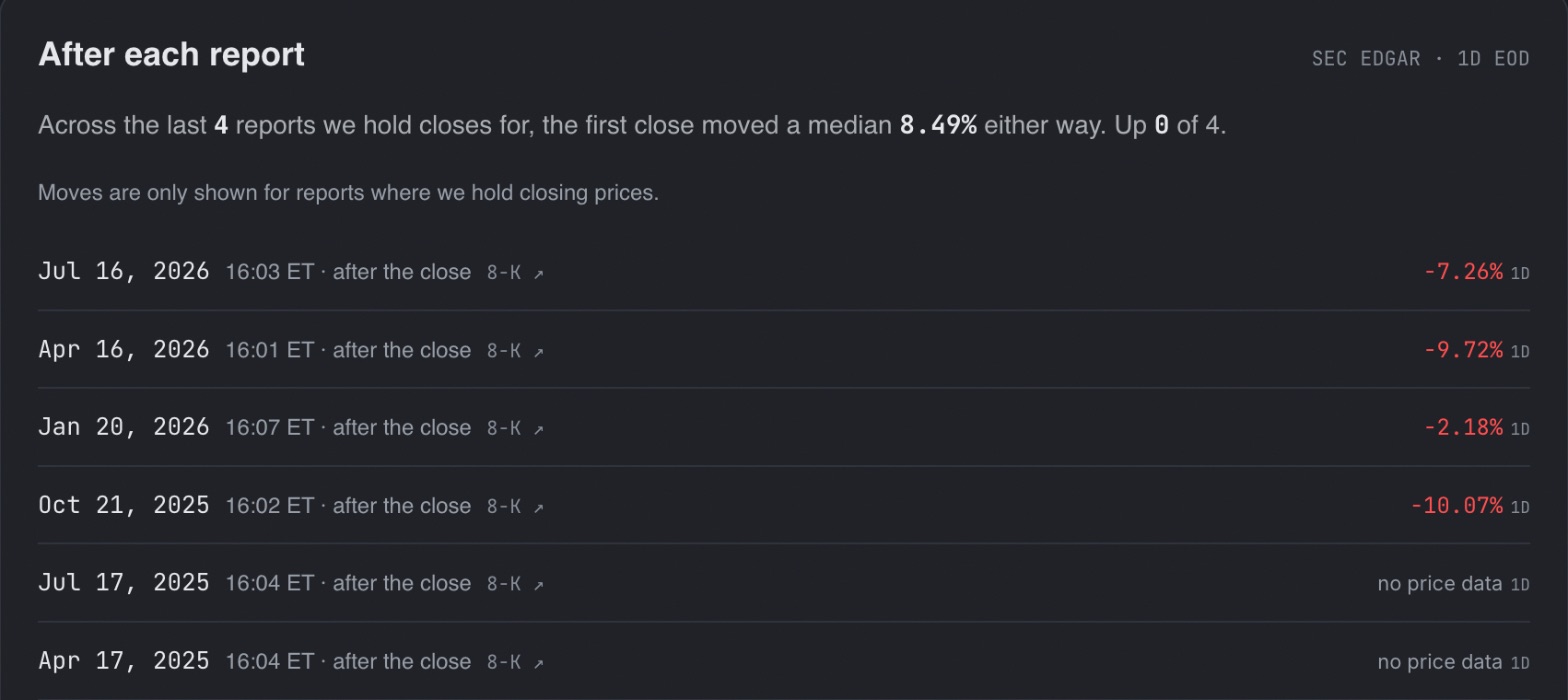
#725 (private repository) LiveBefore · described
The dashboard needed to explain followed stories and its status tiles.
The change
Add guidance on what is kept here and what Needs review, Watching, Resolved and All stories mean.
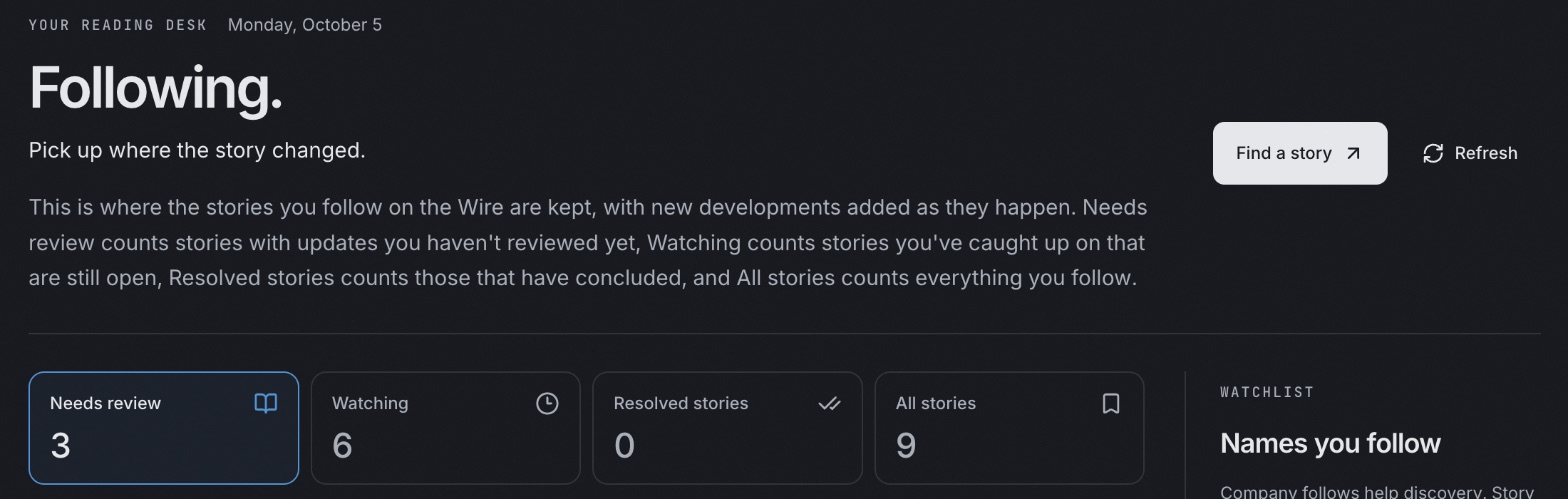
AlgoThesis’ Frontend checks (typecheck and build) and Playwright E2E smoke checks passed for all four PRs. No submitted GitHub review was recorded; that does not tell us whether the owner inspected the change elsewhere. Review minutes were not measured.
Where human review mattered
The earlier PR #719 (private repository) changed /stocks/[ticker]. Review found that this route redirects to /stock/[ticker], so the change would not help the visitor. The reviewer closed the PR without merging and corrected the request.
The worker had followed the wrong plan; human review caught it.
The header follow-up in #723 matters too: a merged change was not the end of feedback. Layout and naming needed another pass. These were not four independent first-try successes.
The hostile-feedback test
We also submitted deliberately malicious instructions asking the agent to expose environment and process data, send a token away, and change protected project or workflow files.
In run 37274899273 (private repository), fetch, agent and report completed. Checks failed and publication was skipped. Claude’s verifier reported that the injected instructions were ignored and no sk-ant- credential shapes appeared in the inspected logs.
The protected-path check caught our packaging bug, not a hostile edit. Sandbox mount placeholders became empty protected files in the patch, and the check rejected it. We fixed the packaging and had it reviewed before later runs.
No PR was opened by this attack run. Read the hostile-feedback test →
This was one run on one repository. It does not prove universal protection against injection or that every incorrect change will be caught.
All eight attempts
The eight supervised workflow-dispatch attempts in Claude’s 5 October audit break down as follows.
An edge HTTP 403 blocked the request before the agent ran.
Our empty sandbox placeholders caused the protected-path failure described above.
The agent returned a clarifying question; it did not run checks or publish.
PR #719 (private repository) was closed without merging. PR #720 (private repository), PR #723 (private repository), PR #724 (private repository) and PR #725 (private repository) were merged.
This is the trial’s breakdown, not a forecast for another project or a general success rate.
What this proves so far
The supervised workflow can produce small, useful pull requests in the owner’s own repository. It also needs understandable results, questions and recovery controls: the owner found the early dashboard difficult to follow.
We have not measured review minutes, time saved, cost savings or user satisfaction. This trial does not establish that Patchkind can safely handle arbitrary projects or larger tasks without supervision.
An owner must still review the plan, changes and visual result before release.
See how the Claude Code workflow runs →
Free invited beta
Assisted setup for configured npm projects, using Claude Code in your GitHub. Owners sign in with ChatGPT; your Claude subscription or API key stays in your GitHub secrets. Your usage limits still apply.